
How to Diagnose Sales Funnel Problems: An Engineer’s Impedance Mismatch
I design RF systems for a living, and it turns out the same instincts I use there are exactly how I now diagnose sales funnel problems in my affiliate marketing business. For years I kept the two worlds separate. They felt unrelated.
They aren’t, really. And one specific engineering concept ended up explaining a problem in my marketing funnel more precisely than any marketing advice I’d read.
The concept: impedance mismatch
In RF engineering, an impedance mismatch happens when a signal traveling down a line hits a boundary where the electrical characteristics don’t line up correctly.
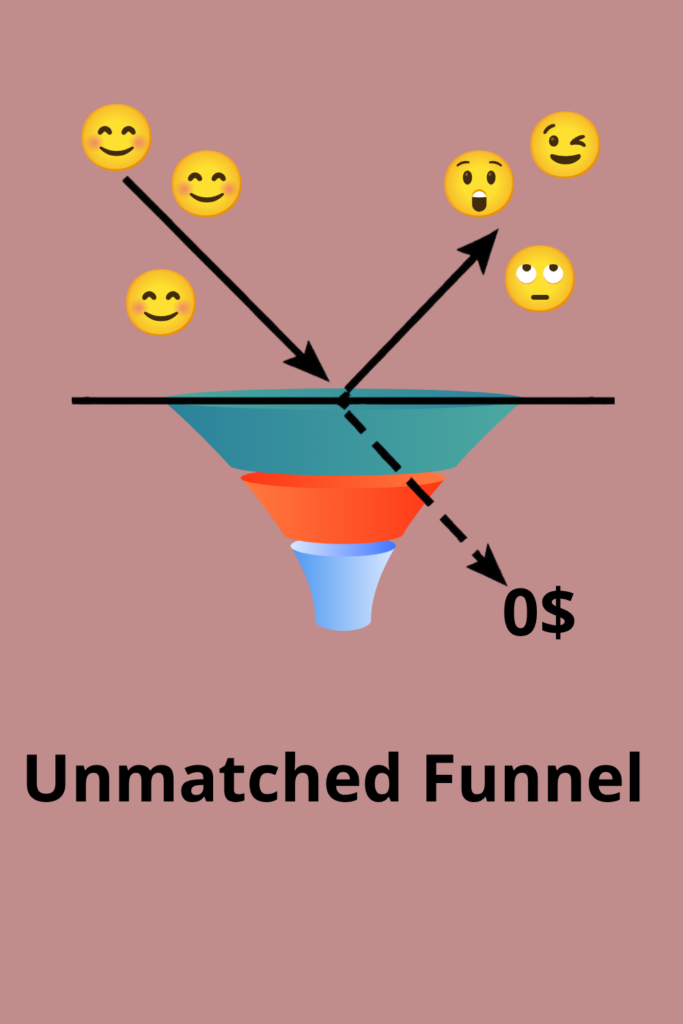
Instead of transferring cleanly into whatever comes next, some of that energy reflects back the way it came.
It’s lost.
The signal that arrives at the destination is weaker than the signal that was sent.
You don’t fix this by sending a stronger signal. Amplifying a mismatched signal just gives you a louder version of the same loss. You fix it by finding the boundary where the mismatch happens and correcting it.
How I diagnose sales funnel problems, step by step
For a stretch of my 60-day sprint, I was getting a reasonable number of clicks on my TikTok bio link, but almost no one was joining my email list from those clicks.
Here’s what was actually happening: my bio link led to my opt-in page — correct, that’s what a bio link should do. But in a lot of my videos, I was talking about a $7 book and saying “link in bio” without being specific about what was actually behind that link.
Someone watching a video about the book would click expecting to land on the book. Instead, they landed on an email opt-in form asking for their address before they’d even seen what they came for.
Expectation didn’t match the destination. Signal reflected. Lost.
The fix wasn’t complicated
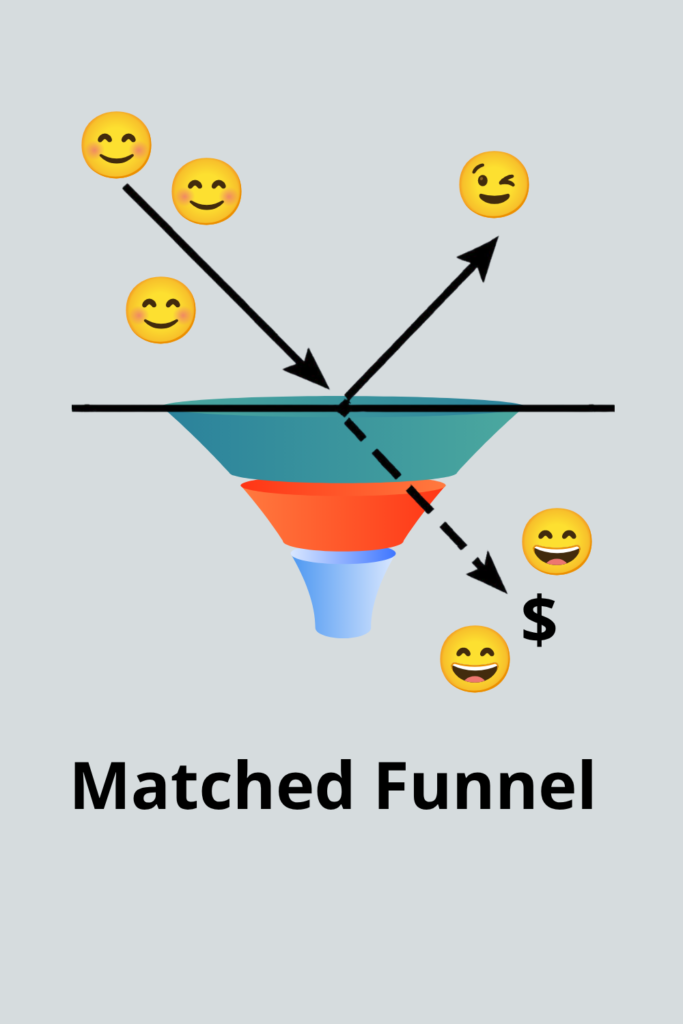
I started being explicit in every video about exactly what the bio link led to — a free guide, an email opt-in — and explained that the book itself was a separate link, delivered through email once someone joined the list.
Two clear paths instead of one ambiguous one. No guessing what a click would actually deliver.
It’s a small change. But in a funnel with limited traffic to begin with, small mismatches account for a large share of the total loss. You don’t need a dramatic redesign. You need to find the specific boundary where trust breaks down and correct that one point.
Why I’m writing this down
Most marketing advice talks about funnels in terms of psychology — trust, urgency, social proof. All real, all relevant. But I’ve found it more useful, at least for me, to think about a funnel the way I’d think about a signal chain: trace it end to end, find where the loss actually happens, and fix that specific point rather than rebuilding the whole thing out of frustration.
I still don’t have this fully solved. I recently lost access to the TikTok account entirely, which is its own kind of forced diagnostic — it’s pushed me to rebuild parts of this funnel on different platforms and pay closer attention to where the actual conversions are coming from, rather than where the most traffic is.
If you’re building something with a funnel that isn’t converting the way you expect, my honest suggestion is the same one I’d give about a circuit that isn’t behaving: don’t assume the whole thing is broken. Trace it. Find the one boundary where the mismatch is happening. Fix that.
If you want to see the current version of what I’m building, start here.


I really enjoyed this perspective, Martin. I never would have connected engineering with marketing, but your explanation made perfect sense. Sometimes the smallest disconnect can quietly stop people from taking the next step.
It was a great reminder that before we rebuild everything, we should probably make sure we’re solving the right problem. Thanks for sharing this.
Connections can be found in anything. This one was simple. I thought it was neatly explaining the issue I was experiencing with my funnel while giving an engineering “perspective” which is part of my brand. Thanks Ernie!